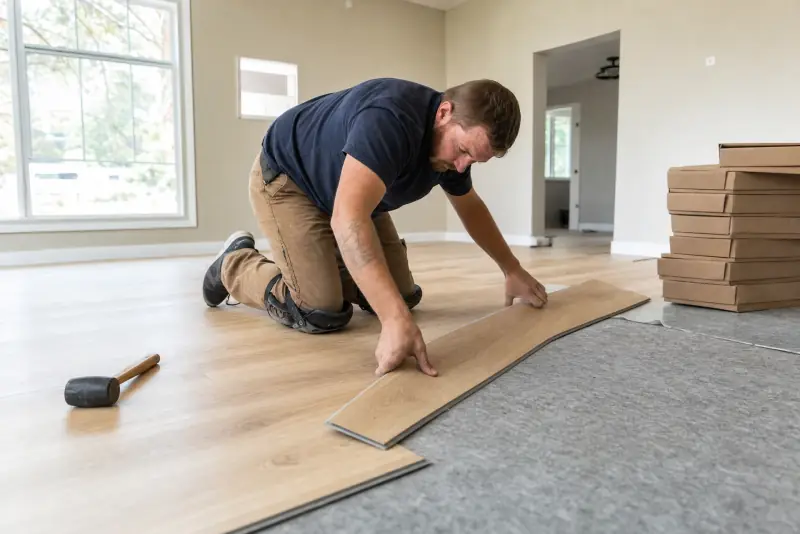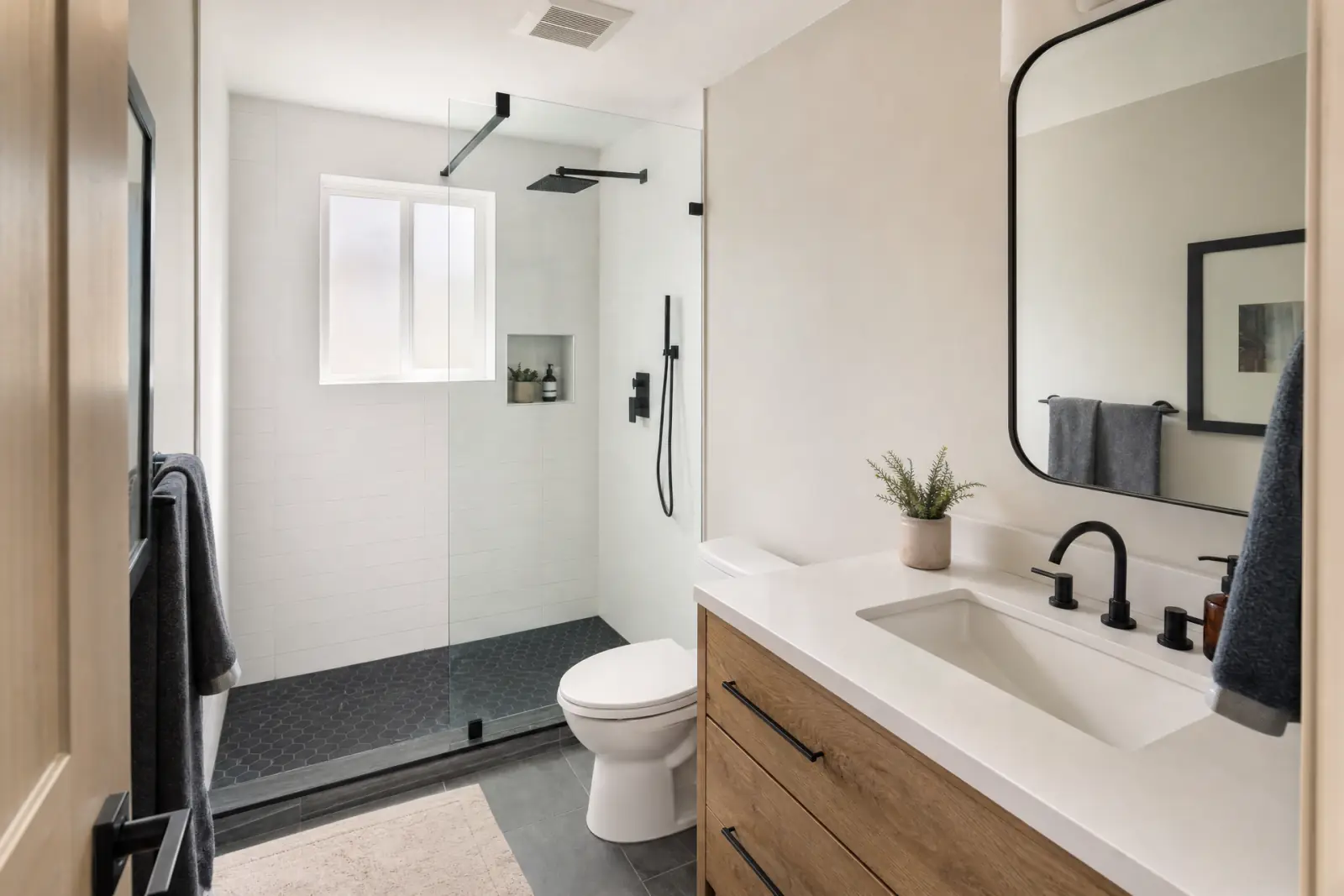
A bathroom remodel can be a quick refresh, such as a new vanity, fixtures, and paint, or a full gut with new tile, a new shower, and updated plumbing and wiring. This guide covers how to pick the right scope, which materials hold up to water, what happens during the job, and what to ask a remodeler. When you are ready, describe your project and Swupi connects you with independent local remodeling companies that serve your area. You agree on the scope and timing with the company directly, and you are never obligated to hire anyone.
Do you need a refresh or a full bathroom remodel?
Start with what bothers you most. If the layout works and the plumbing is sound, a refresh may solve the problem. If water damage, a cramped layout, or aging fixtures are the issue, a full remodel or a layout change may make more sense.
| Scope | Typical work | What stays in place |
|---|---|---|
| Refresh | Paint, a new vanity or top, new faucets and lights, a new toilet, maybe new flooring | Tub, shower, walls, and pipes |
| Full remodel | Removal down to the studs, updated plumbing and wiring, new shower or tub, tile, vanity, and flooring | Fixture locations |
| Layout change | Everything in a full remodel, plus moving the toilet, shower, or sink, or moving a wall | Often nothing but the room itself |
Signs a bigger project may be needed:
- Soft spots in the floor near the toilet or tub
- Loose, cracked, or missing tile, or crumbling grout
- Mold or mildew that comes back after cleaning, or peeling paint from moisture
- Low water pressure or slow drains in more than one fixture
- A tub-shower combo you want to change to a walk-in shower for easier entry
Soft floors and recurring moisture can point to leaks behind walls. Have a remodeler or a plumber check for hidden damage before you pick finishes.
Which shower, wall, and floor materials suit a bathroom?
Every surface in a bathroom gets wet, so pick materials by how they handle water and how much upkeep you want.
| Material | Look | Water resistance | Upkeep |
|---|---|---|---|
| Porcelain tile | Wide range, including stone and wood looks | Very low water absorption | Grout lines need cleaning, and some grout needs sealing |
| Ceramic tile | Many colors and shapes, common on walls | Glazed surface resists water | Same grout care as porcelain |
| Natural stone | Each piece is different | Porous; needs a sealer | Reseal on the maker's schedule; avoid acidic cleaners |
| Acrylic or fiberglass surround | Smooth, one-piece or few-piece panels | Few seams for water to get behind | Wipes clean; can scratch with abrasive pads |
| Solid-surface wall panels | Seamless, stone-like look | Nonporous surface | Light scratches can often be buffed out |
| Luxury vinyl flooring | Wood or stone look, softer and warmer underfoot | Many products are made for wet rooms | Check the maker's guidance for bathrooms |
Tile and grout alone do not keep water out of the wall. In a tiled shower, the waterproof layer behind the tile does that job, so ask each remodeler which backer board and waterproofing membrane they plan to use.
How do you choose a bathroom remodeler?
Bathroom remodels often involve plumbing, electrical, and structural work, which most states and cities regulate. Check the remodeler's license yourself on your state contractor board's website, and confirm the plumber and electrician on the job hold the licenses your state requires.
If your home was built before 1978, the U.S. Environmental Protection Agency requires renovation firms that disturb painted surfaces in the home to be certified and to follow lead-safe work practices. The EPA has an online tool to find a lead-safe certified firm.
The Federal Trade Commission's home improvement guide recommends:
- Getting more than one written estimate that lists the work, materials, and dates
- Asking for proof of insurance
- A contract listing the company's name, address, phone, license number, and every promise
- Not paying the full amount up front
Questions to ask each remodeler:
- Who pulls the permits, and who is on site each day?
- Which tile, vanity, and fixtures are included, and when do I need to choose them?
- How do you handle water damage found after demolition?
- Whose warranty covers the products, and whose covers the labor?
What happens during a bathroom remodel?
Most remodels move through the same stages.
- Design and quote: you choose the layout and finishes, and the remodeler writes up the scope. Order long-lead items, like custom vanities or glass, early.
- Permits: plumbing and electrical changes often need permits and inspections.
- Demolition: old fixtures, tile, and drywall come out. This is when hidden leaks or rot show up.
- Rough-in: plumbing, wiring, and the exhaust fan are installed or moved, then inspected.
- Waterproofing and walls: the shower area gets a waterproof backer and membrane before tile.
- Tile and finishes: tile, flooring, vanity, toilet, fixtures, and lighting go in.
- Final inspection and punch list: walk the room with the remodeler and list anything that needs fixing before the job is signed off.
A refresh can take days. A full remodel often takes a few weeks, and longer if materials are delayed or damage turns up. Get a timeline in your contract.
If this is your only bathroom, ask how the remodeler will keep a toilet working during the project, or plan somewhere else to shower. Ask about dust control and where debris will go.
How can a remodel make a bathroom safer and easier to use?
A remodel is a good time to plan for safety, for yourself and for anyone who visits or may live with you later.
- Grab bars: ask the remodeler to add solid backing in the walls near the toilet and shower, so grab bars can be mounted securely now or later. Towel bars are not built to hold a person's weight.
- Walk-in or curbless shower: a low or no-step entry makes getting in and out easier. It needs careful floor sloping and waterproofing.
- Slip resistance: ask about floor tile with a textured or slip-resistant surface, and smaller tiles on shower floors, where more grout lines add grip.
- Outlet protection: bathroom outlets near water need ground-fault (GFCI) protection. Ask the electrician to confirm this meets your local code.
- Lighting and ventilation: good light at the vanity and in the shower, and an exhaust fan vented to the outside, help with both safety and moisture.
- Anti-scald valves: a pressure-balancing or thermostatic shower valve helps keep water temperature steady when someone flushes a toilet or runs a faucet elsewhere.
How do you keep a new bathroom in good shape?
Moisture is the main enemy of any bathroom. Most upkeep comes down to getting water out fast.
- Run the exhaust fan during every shower and for a while after. If your old bathroom had peeling paint or mildew, ask your remodeler whether the fan is sized and vented to the outside.
- Squeegee glass and tile after showers to cut down on soap scum and hard-water spots.
- Seal grout if your tile needs it. Ask your installer what product they used and how often it should be resealed.
- Check caulk around the tub, shower, and sink once or twice a year. Replace it when it cracks or pulls away.
- Watch for leaks under the vanity and around the toilet base. A small drip found early is a much smaller repair.
- Clean with the right products. Natural stone and some finishes can be damaged by acidic or abrasive cleaners. Follow the maker's care guide.
Keep your contract, product warranties, paint colors, and tile names in one folder. You will need them for touch-ups or repairs later.
What happens after you request bathroom remodeling quotes?
Swupi is a referral service, not a contractor. When you describe your bathroom project, Swupi connects you with independent local remodeling companies that serve your area. Here is what usually happens next:
- A company contacts you. Expect a call or message to talk through the project and set up a visit.
- A walk-through. The company looks at the space, takes measurements, and asks what you want to change.
- A written quote. Ask for the scope of work, the materials, who does each part of the job, and a start and finish date in writing.
- You compare and decide. Line up quotes by scope and schedule, ask follow-up questions, and check any license yourself.
You agree on the scope and timing directly with the company you choose, and you are never obligated to hire anyone. See how Swupi works.
Bathroom Remodeling questions, answered
How long does a bathroom remodel take?
A simple refresh can be finished in days. A full remodel with new plumbing, tile, and a new shower often takes a few weeks, and longer if materials are delayed, inspections take time, or hidden water damage turns up. Ask for a written timeline in your contract.
Do I need a permit to remodel a bathroom?
Cosmetic updates like paint or a new vanity often need no permit. Moving plumbing, adding circuits, or changing walls usually does. Rules vary by city and county. Your remodeler should know local requirements; confirm in writing who pulls permits and schedules inspections.
What is the difference between a bathroom refresh and a full remodel?
A refresh updates surfaces and fixtures, such as paint, the vanity, faucets, lights, and the toilet, while the tub, shower, and pipes stay put. A full remodel takes the room down to the studs and replaces the shower or tub, tile, plumbing, and wiring. Moving fixtures to new spots turns it into a layout change.
Should I replace my tub with a walk-in shower?
It depends on who uses the bathroom. A walk-in shower is easier to step into and can make a small room feel bigger. A tub is handy for bathing young children or pets, and some homeowners like to keep at least one tub in the house. Talk through how you use the room with each remodeler.
Can I use my bathroom during a remodel?
Usually not for long. During demolition, rough-in, and tiling, the toilet and shower are often out of service for stretches of time. If it is your only bathroom, ask the remodeler how long each fixture will be down and whether a toilet can be kept working at night.
How does Swupi help with a bathroom remodel?
Swupi is a referral service, not a contractor. You share your project details, and Swupi connects you with independent local remodeling companies that serve your area. They contact you to discuss the project and give quotes. You agree on scope and timing directly with the company, and you are never obligated to hire anyone.
Ready for bathroom remodeling quotes?
Or call (833) 421-3714. Calls may be recorded.