Gutter service covers installing, replacing, repairing, and cleaning the gutters and downspouts that carry rain away from your roof and foundation. Working gutters help protect your fascia boards, siding, landscaping, and basement from water damage. Tell Swupi about your home, and we connect you with independent local gutter companies that serve your area. You compare their quotes, agree on the scope and timing directly with the company you pick, and you are never obligated to hire anyone.
What are the signs your gutters need repair or replacement?
Gutters need attention when water spills over, leaks through, or pools near the house. Small problems, like a loose hanger or a leaking seam, can often be repaired. Widespread rust, cracks, or sagging usually mean replacement.
Watch for these signs:
- Water pouring over the edge during rain, even after cleaning
- Gutters sagging or pulling away from the fascia board
- Cracks, holes, rust spots, or leaking seams and corners
- Peeling paint or water stains on the siding below the gutters
- Puddles, washed-out mulch, or soil erosion near the foundation
- Water or dampness in the basement or crawlspace
- Rotting fascia boards behind the gutter
Repair usually works when the problem is in one spot. Replacement makes sense when the gutters are sectional with many leaking joints, sized too small for your roof, or damaged along most of their length.
Gutters and roofs work together. Clogged gutters can let water back up under the roof edge, and worn shingles shed granules that clog gutters. If you see both problems, ask a roofer to take a look too. See our roofing guide for signs of roof wear.
Which gutter material and style fits your home?
Gutters differ in material, style, and size. The right mix depends on your roof, your local weather, and the look you want. Ask each installer what holds up in your area.
| Material | Durability | Look | Upkeep and notes |
|---|---|---|---|
| Vinyl | Light and rust-proof, but can crack or sag in extreme heat or cold | Limited color choices | Often a do-it-yourself option for small, one-story runs |
| Aluminum | Rust-resistant; thinner gauges can dent from ladders or falling limbs | Many painted colors | The most common choice for seamless gutters |
| Steel | Sturdier against dents and heavy snow | Painted finishes | Can rust over time, especially where the coating is scratched |
| Copper | Very long-lasting and does not rust | Develops a green patina over time | Often chosen for historic or high-end homes; needs an installer who works with copper |
| Wood | Can rot without regular care | Traditional look on older homes | Needs regular sealing or treatment |
Style and size matter too:
- Seamless vs. sectional: seamless gutters are cut to length on site, so they have joints only at corners and downspouts. Sectional gutters come in pieces and have more seams that can leak, but a damaged piece can be swapped out.
- K-style vs. half-round: K-style gutters have a flat back and a decorative front and are common on newer homes. Half-round gutters suit older and historic homes.
- Size: 5-inch gutters are common on homes; 6-inch gutters carry more water for large or steep roofs and areas with heavy rain. Larger downspouts help too.
How do you choose a gutter installer?
Contractor licensing rules for gutter work vary by state and city. Some states require a license for exterior work above a certain project size, and some leave it to local governments. Check your state contractor board and your city or county, and confirm any license number the installer gives you.
The Federal Trade Commission's home improvement guide recommends getting several written estimates, asking for proof of insurance, and getting a contract that lists the company's name, address, phone, and license number. It also warns about door-to-door offers and pressure to decide on the spot.
Gutter-specific questions to ask:
- Are the gutters seamless or sectional, and what gauge or thickness is the metal?
- What size gutters and downspouts do you recommend for my roof, and why?
- How far apart will the hangers be?
- Where will the downspouts drain, and will you add extensions to carry water away from the foundation?
- Is removing the old gutters part of the job? What if the fascia boards are rotted?
- Who covers the product warranty, and who covers the workmanship?
Ask about gutter guards as a separate item, so you can decide if they make sense for your trees and roof.
Swupi connects you with independent local gutter companies. See how Swupi works.
What happens during a gutter installation?
Most gutter jobs are fast compared with other exterior work. A typical install follows these steps.
- Measure and quote: the installer measures the roofline, counts corners and downspouts, checks the fascia boards, and gives you a written quote.
- Remove old gutters: the old system comes down and the fascia is checked for rot. Damaged boards are replaced before the new gutters go up.
- Form the gutters: for seamless gutters, a machine on the truck cuts continuous runs to fit each section of your home.
- Hang and slope: gutters are fastened with hangers and set with a slight slope toward each downspout so water drains instead of pooling.
- Downspouts and drainage: downspouts are attached, and extensions or splash blocks direct water away from the foundation.
- Test and clean up: many installers run water through the system to check flow and leaks, then remove debris.
Many single-family homes are finished in a day, but size, height, and fascia repairs can extend the job. Ask for a time estimate in your quote.
Walk the house with the installer at the end. Look for gaps at the corners, loose hangers, and downspouts that empty right next to the foundation.
Do you need gutter guards?
Gutter guards are screens, covers, or inserts that keep leaves and debris out of the gutter while letting water in. Whether they help depends on your yard.
- They can help if tall trees drop leaves, needles, or seed pods on your roof, or if your gutters are hard to reach.
- They may not be needed if your roof has few trees nearby and your gutters stay clear with regular cleaning.
- They still need checks. Fine debris, pine needles, and roof grit can build up on top of or under guards, so plan to look at them from time to time.
Common types include mesh screens, perforated covers, surface-tension hoods, and foam or brush inserts. Ask installers which type suits the trees around your home and how the guards attach to your roof edge, since some styles slide under the shingles.
How do you maintain your gutters?
Clean gutters let rain move off the roof and away from the foundation. Most maintenance is simple.
- Clean them regularly. Many homeowners clean gutters in late spring and again after the leaves fall. Homes under large trees may need it more often.
- Flush the downspouts. Run a garden hose into the top of each downspout. If water backs up, there is a clog to clear.
- Check the slope. Standing water in a gutter a day after rain can mean a low spot or a loose hanger.
- Tighten loose hangers and reseal leaking corners and end caps with gutter sealant.
- Keep water moving away. Make sure downspout extensions or splash blocks send water several feet from the foundation.
- Look after storms. Heavy wind, ice, and falling branches can bend or loosen gutters.
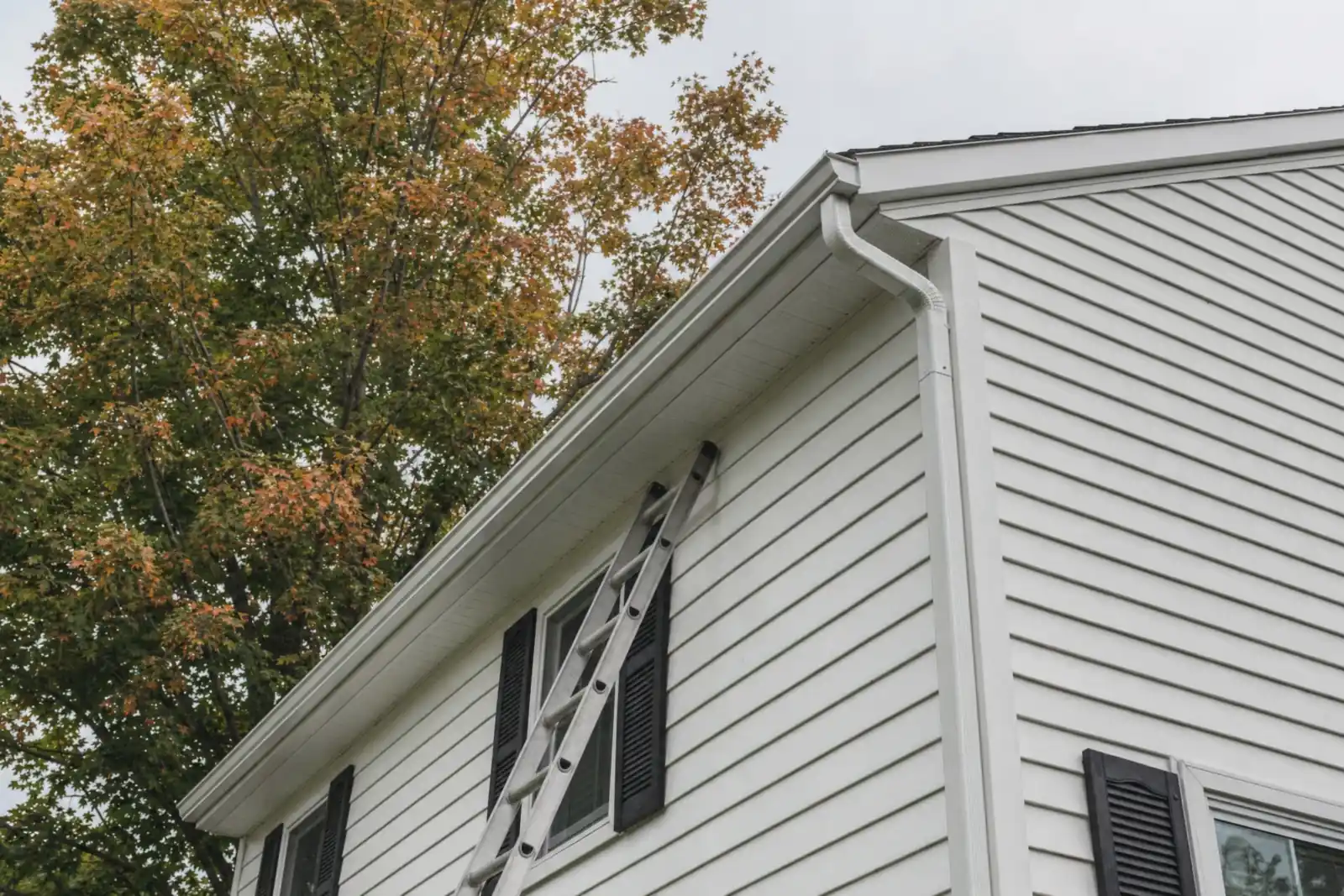
Stay safe. Ladder falls are a real risk. Use a sturdy ladder on level ground, have someone hold it, and stay off the roof. For second-story gutters, many homeowners hire a pro.
Well-draining gutters also help your roof last longer.
Gutters questions, answered
Are seamless gutters better than sectional gutters?
Seamless gutters are cut to length on site, so they have joints only at corners and downspouts and fewer places to leak or clog. Sectional gutters come in pieces with more seams, but a damaged section can be replaced on its own. Ask installers which style suits your home.
Which gutter material suits my home?
It depends on your climate, roof, and the look you want. Aluminum is the most common choice for seamless gutters. Steel stands up better to dents and heavy snow but can rust. Vinyl is light but can crack in extreme weather, and copper lasts a long time and weathers to a green patina.
How often should gutters be cleaned?
Many homeowners clean gutters at least twice a year, often in late spring and after fall leaves drop. Homes under large trees may need cleaning more often. Signs they need it now include water spilling over the edge, plants growing in the gutters, or downspouts that barely drain during rain.
How long does gutter installation take?
Many single-family homes are done in a day. Larger homes, second-story work, many corners, or rotted fascia boards that need replacing can add time. Weather can also delay the job. Ask the installer for a time estimate in the written quote.
Do gutter guards mean I never have to clean my gutters?
No. Guards can cut down on how often you clean, but fine debris, pine needles, and roof grit can still build up on or under them. Plan to check them from time to time, especially after storms and in the fall.
How does Swupi help with gutters?
Swupi is a referral service, not a gutter contractor. You share your home and project details, and we connect you with independent local gutter companies that serve your area. They contact you to measure and quote. You agree on the scope and schedule directly with the company, and you are never obligated to hire anyone.
Ready for gutters quotes?
Or call (833) 421-3714. Calls may be recorded.