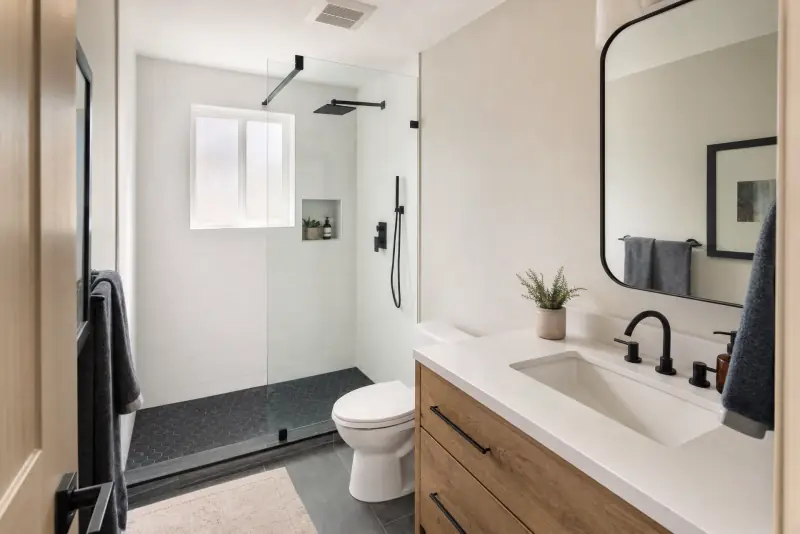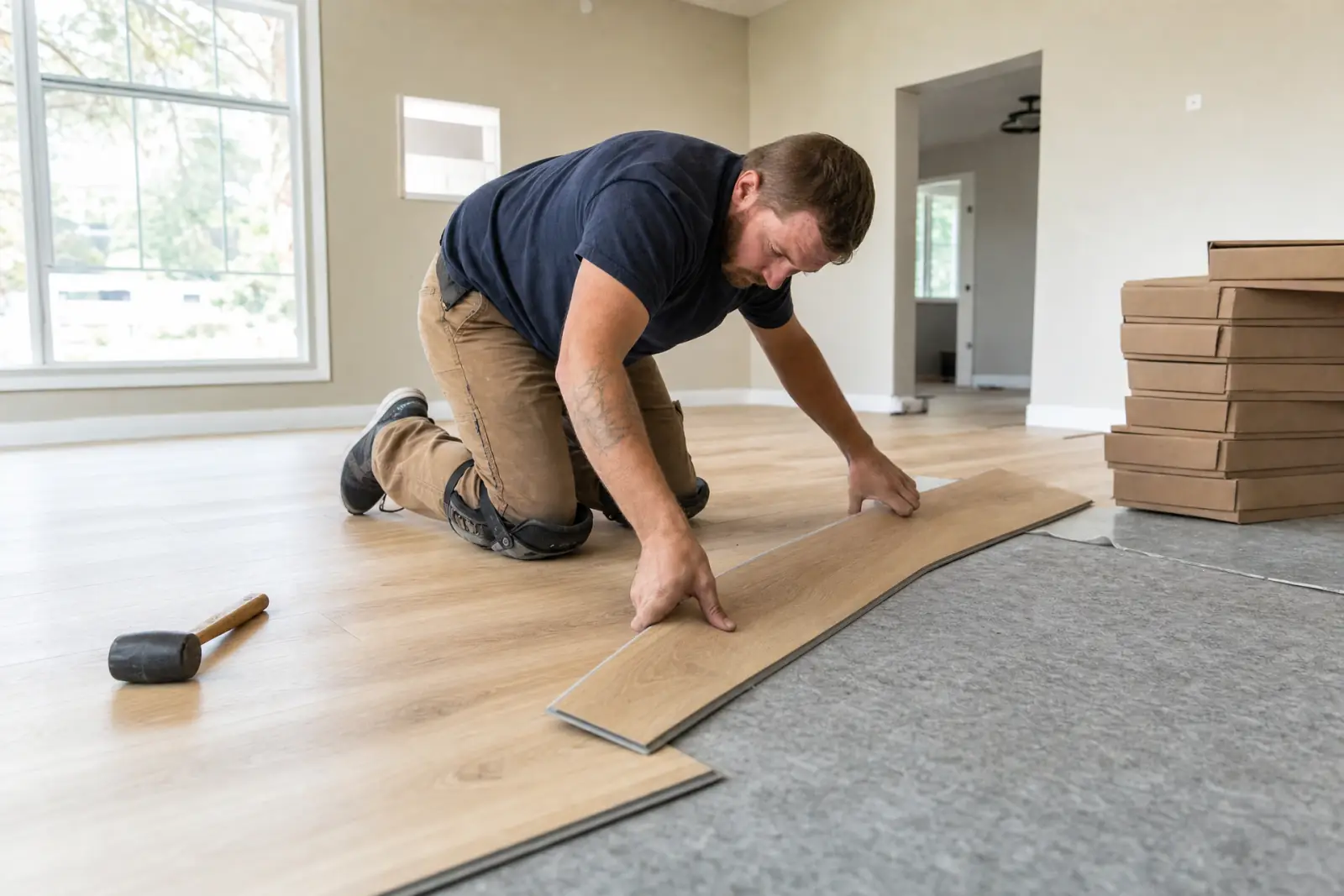
Flooring installation means removing old flooring, preparing the subfloor, and installing new hardwood, laminate, vinyl plank, tile, or carpet. The right material depends on the room: how much water it sees, how much traffic it gets, and how it should feel underfoot. This guide compares common materials, explains what happens on installation day, and lists questions to ask an installer. Tell Swupi about your floors, and we connect you with independent local flooring companies that serve your area. You agree on the scope and timing directly with the company, and you are never obligated to hire anyone.
When should you replace your floors?
Replace flooring when it is damaged beyond repair, unsafe, or no longer fits how you use the room. Many worn floors can be repaired or refinished instead.
Signs replacement makes sense:
- Soft, spongy, or bouncy spots, which can mean subfloor damage
- Warped, cupped, or buckled boards from water
- Cracked tiles spread across the room, or loose tiles that sound hollow
- Carpet that is matted, stained, or holding odors after deep cleaning
- Vinyl or laminate with peeling seams or swelling edges
- A trip hazard, such as lifted edges or uneven transitions between rooms
Before you replace, consider these options:
- Solid hardwood can often be sanded and refinished more than once.
- A few broken tiles or damaged planks can often be swapped out if matching pieces are available.
- Carpet stretching can fix wrinkles and ripples.
If the damage came from a leak, fix the source first. Flooring over a wet subfloor fails again. A plumber can find a hidden leak, and water around tubs and toilets may point to a bigger bathroom project.
Which flooring material suits each room?
Match the material to the room. Water, foot traffic, pets, and comfort underfoot matter more than anything else.
| Material | Water resistance | Feel and wear | Often used in |
|---|---|---|---|
| Solid hardwood | Low; standing water can warp it | Warm look; can dent and scratch but can be refinished many times | Living rooms, dining rooms, bedrooms |
| Engineered hardwood | Low to moderate; more stable than solid wood when humidity changes | Real wood top layer; refinishing depends on its thickness | Main floors, and some areas over concrete if the maker allows |
| Luxury vinyl plank or tile | High; many products are made for wet areas | Softer and quieter underfoot; resists scratches | Kitchens, bathrooms, basements, laundry rooms |
| Sheet vinyl | High; few seams | Soft underfoot; heavy furniture can dent it | Bathrooms, laundry rooms |
| Laminate | Low to moderate; water at the seams can swell the core | Hard, scratch-resistant wear layer | Living areas, hallways, bedrooms |
| Ceramic or porcelain tile | Very high | Very durable; hard and cool underfoot | Bathrooms, kitchens, entries |
| Carpet | Low; spills soak in | Soft, warm, and quiet; shows stains and traffic paths | Bedrooms, family rooms, stairs |
Always check the maker's instructions for the room you have in mind. Some products are not meant for bathrooms or below-grade basements, and installing them there can void the warranty.
How do you choose a flooring installer?
Licensing rules for flooring work vary. Some states require a contractor license for flooring jobs, and others leave it to cities or counties. Check your state contractor board and your city or county for the rules where you live, and confirm any license the installer gives you.
The Federal Trade Commission's home improvement guide recommends several written estimates, proof of insurance, a contract with the company's name, address, phone, and license number, and not paying the full amount up front.
Flooring-specific questions to ask:
- Subfloor: will you check it for flatness and moisture, and what happens if it needs leveling or repair?
- Removal: is tear-out and haul-away of the old floor included?
- Acclimation: does this material need to sit in the room before install, and for how long? Follow the maker's instructions.
- Extra material: how much extra are you ordering for cuts and future repairs?
- Trim and transitions: are baseboards, quarter-round, and thresholds included?
- Warranty: who covers the product, and who covers the installation?
Installing a floor against the maker's instructions can void the product warranty, so ask the installer to confirm they follow them. If your home was built before 1978 and the job disturbs painted trim, ask whether the firm is EPA lead-safe certified.
What happens on flooring installation day?
Most flooring jobs follow these steps.
- Measure and quote: the installer measures each room and checks the subfloor. You pick the material and get a written quote.
- Delivery and acclimation: some materials, such as hardwood and some laminates, need to rest in the home before install. The maker's instructions set the time.
- Room prep: furniture is moved out, if included, and baseboards may be removed.
- Tear-out: old flooring comes up. Expect dust and noise.
- Subfloor work: the installer fixes squeaks, levels low spots, and replaces damaged sections.
- Install: underlayment goes down if needed, then the new floor.
- Finish: trim and transitions go back on, and the area is cleaned.
How long it takes depends on the material and the size of the job. Floating floors like laminate and vinyl plank often go in faster. Tile needs time for mortar and grout to set. Site-finished hardwood needs drying time between coats. Ask your installer when you can walk on the floor and when furniture can go back.
Before install day, empty closets you want floored, take down wall items near the work, and plan for pets and kids to stay out of the work area.
How do you care for new floors?
Good care keeps new floors looking right and protects your warranty. Always check the maker's care guide first, because some cleaners can void a warranty.
- Hardwood: sweep or vacuum with a hard-floor setting. Clean with a damp, not wet, mop and a cleaner made for wood. Wipe spills quickly. Use felt pads under furniture.
- Laminate: keep standing water off the seams. Use a barely damp mop. Do not steam-clean unless the maker allows it.
- Luxury vinyl plank: it handles moisture well, but seams and edges still need care. Avoid rubber-backed mats, which can stain some vinyl.
- Tile: sweep often so grit does not scratch the glaze. Seal the grout if your installer recommends it.
- Carpet: vacuum often, treat spots right away, and follow the maker's guide for deep cleaning.
For every floor type:
- Put mats at outside doors to catch grit.
- Keep pet nails trimmed.
- Keep indoor humidity steady; big swings can cause wood to gap or cup.
- Save a box of leftover material for future repairs, and note the product name and color.
Keep your invoice and warranty papers. If a problem shows up, the maker may ask for proof of how the floor was installed and cleaned.
What happens after you request flooring quotes?
Swupi is a referral service, not a contractor. When you describe your flooring project, Swupi connects you with independent local flooring companies that serve your area. Here is what usually happens next:
- A company contacts you. Expect a call or message to talk through the project and set up a visit.
- A walk-through. The company looks at the space, takes measurements, and asks what you want to change.
- A written quote. Ask for the scope of work, the materials, who does each part of the job, and a start and finish date in writing.
- You compare and decide. Line up quotes by scope and schedule, ask follow-up questions, and check any license yourself.
You agree on the scope and timing directly with the company you choose, and you are never obligated to hire anyone. See how Swupi works.
Flooring questions, answered
Which flooring works well in bathrooms and basements?
Rooms that get wet or damp call for materials that handle moisture, such as porcelain or ceramic tile, sheet vinyl, and luxury vinyl plank made for wet areas. Solid hardwood and many laminates are poor fits for these rooms. Check the maker's instructions for the room before you buy.
Is luxury vinyl plank better than laminate?
It depends on the room. Vinyl plank handles moisture better, so it often suits kitchens, baths, and basements. Laminate has a hard, scratch-resistant wear layer and can feel firmer underfoot, but water at the seams can make it swell. Check each product's warranty for the rooms you plan to use it in.
Which flooring holds up well with pets?
Tile and luxury vinyl plank handle scratches and accidents well. Laminate resists scratches, but spills need to be wiped up before they reach the seams. Hardwood can scratch and dent, though matte finishes and harder woods show less wear. Carpet can hold stains and odors. Keeping pet nails trimmed helps any floor.
Can new flooring go over my old floor?
Sometimes. Many floating floors can go over an existing hard floor that is flat, dry, and firmly attached, if the maker allows it. Carpet and damaged or loose flooring usually need to come out. Also check door clearances and appliance heights, since a new layer raises the floor.
How long does flooring installation take?
It depends on the room size, the material, and subfloor prep. Floating laminate or vinyl plank often goes in faster than tile, which needs time for mortar and grout to set, or site-finished hardwood, which needs drying time between coats. Some materials must acclimate in the home first. Ask your installer for a timeline.
How does Swupi help with flooring?
Swupi is a referral service, not a contractor. You share your flooring project, and Swupi connects you with independent local flooring companies that serve your area. They contact you to measure and quote. You compare offers, choose whether to hire anyone, and agree on the scope and schedule directly with the company.
Ready for flooring quotes?
Or call (833) 421-3714. Calls may be recorded.