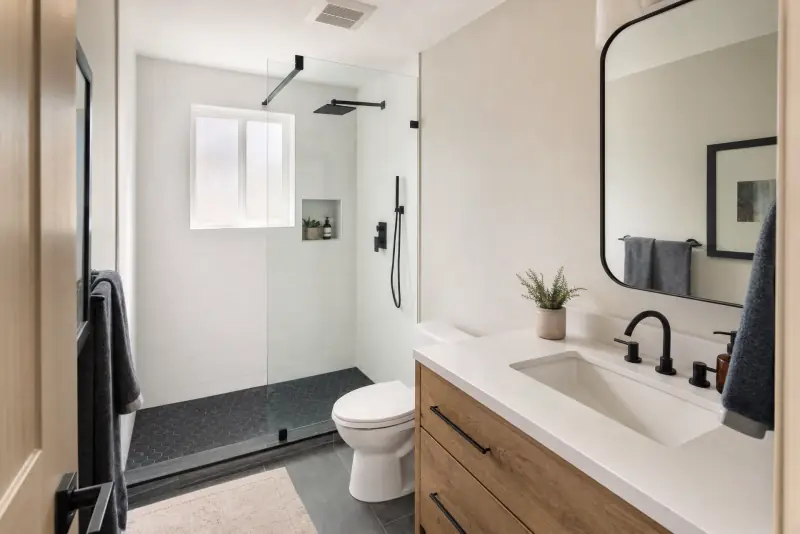
Walk-in tubs have a door in the side, so you step over a low threshold instead of a high tub wall and sit on a built-in seat. Walk-in showers replace a tub with a low-entry or curbless shower. Both are popular choices for aging in place, and the right one depends on how the person likes to bathe and how much room the bathroom has. Describe your project, and Swupi connects you with independent local walk-in tub and shower companies that serve your area, so you can compare quotes and decide who to hire.
Walk-in tub or walk-in shower: which fits your needs?
Both options aim to make bathing easier as you age in place. The right choice depends on who will use it, how they like to bathe, and how much room you have.
A walk-in tub suits people who enjoy soaking or want to sit while bathing. It has a watertight door and a built-in seat, and many models offer jets. One trade-off, according to This Old House: walk-in tubs take longer to fill and drain, so you sit inside while you wait.
A walk-in shower suits people who prefer quick showers or use a walker or wheelchair. A low curb or a curbless entry, a bench, and a handheld shower make daily use simpler, and there is often room for a helper.
Questions to think through:
- Does the person bathing need to sit down?
- Is stepping over the current tub wall the main problem?
- Does anyone use a walker or wheelchair now, or might they soon?
- Is this the only tub in the house, and does anyone else in the home want a standard tub?
For general home safety, the National Institute on Aging's home safety tips suggest grab bars near toilets and in the tub or shower, and nonslip strips on surfaces that may get wet.
If you want to redo the whole room, with new tile, vanity, and flooring, that is a larger project. See the bathroom remodeling guide for whole-room projects.
What should you check in your bathroom before choosing a unit?
A walk-in tub or shower has to fit your space, your plumbing, and the path into the room. Check these points before the in-home visit, and ask each company to confirm them:
- Tub space: measure the length and width of the current tub area. Many walk-in tubs are made to fit a standard tub space, and This Old House describes a standard walk-in tub as 60 by 32 inches.
- Path into the bathroom: measure the bathroom door and any tight hallway turns, since the unit has to be carried in.
- Water heater: a walk-in tub is filled while you sit inside, so ask whether your water heater can fill the model you want with warm water.
- Electrical: jets and heated surfaces usually need power near the tub. Ask whether the model needs its own circuit.
- Floor: ask the company to check that the floor can support the filled tub and whether any subfloor repair is needed.
- Drain and valve location: moving them adds plumbing work, so ask whether the model you like fits your current layout.
- Door swing: decide whether an inward or outward opening door works better with your toilet, vanity, and walking space.
Write down what you find and share the same notes with each company so the quotes cover the same job.
Which accessibility-focused features should you look for?
Features matter more than brand names. Try to see a tub or shower in person, and sit on the seat if you can.
For walk-in tubs, ask about:
- Step-in height: how high the threshold is from the floor.
- Door direction: inward or outward opening, and which works in your space.
- Seat height and width: whether the person can sit and stand up comfortably.
- Fill and drain: how long it takes, and whether your water heater can fill the tub with warm water.
- Handheld shower and controls: whether controls are within reach while seated.
- Jets and heated surfaces: whether they need a separate electrical circuit.
For walk-in showers, ask about:
- Entry: a low curb or a curbless design, and how the floor slopes to the drain.
- Seating: a built-in bench or a fold-down seat.
- Grab bars: where they go and what they are anchored into behind the wall.
- Handheld shower on a slide bar: useful for seated bathing.
- Floor surface: textured tile or a slip-resistant base.
- Temperature control: a valve that limits sudden temperature swings.
How do you choose a walk-in tub or shower company?
Many walk-in tubs and showers are sold during an in-home visit. Take your time. Get at least two written quotes that name the exact model and list what the installation includes.
Installation usually involves plumbing and sometimes electrical work, which states and cities regulate. Check the company's license yourself on your state contractor board's website, and ask whether the plumber and electrician on the job hold the licenses your state requires.
The Federal Trade Commission's home improvement guide recommends:
- Getting more than one written estimate
- Asking the company for proof of its liability coverage
- A contract with the company's name, address, phone, license number, and start and finish dates
- A written statement of your right to cancel the contract within three business days
- Not paying the full amount up front
Also ask whose warranty covers the tub or shower and whose covers the installation, and get both in writing. Swupi connects you with independent local companies; see how Swupi works.
What happens during a walk-in tub or shower installation?
Most installs follow the same basic steps.
- In-home measure: the company measures the space, checks the door width to the bathroom, and looks at the plumbing and water heater.
- Removal: the old tub and surround come out, and the floor and walls are checked for water damage.
- Plumbing and electrical: the drain and valve are adjusted or moved, and a circuit is added if the tub has jets or heat.
- Setting the new unit: the walk-in tub or shower base is leveled and connected.
- Walls and fixtures: the surround or tile, grab bars, seat, and handheld shower go in.
- Testing: the installer fills the tub or runs the shower to check the door seal, drain, and connections for leaks.
How long the job takes depends on the unit and the room, and should be confirmed in your quote. This Old House says a professional tub-to-shower conversion takes about three to seven days.
If this is your only bathroom, plan where to bathe during the work. Afterward, check the door seal and grab bars now and then, and clean jets as the maker's manual directs. If you notice a leak or slow drain, a plumber can take a look.
Walk-In Tubs questions, answered
Is a walk-in tub or a walk-in shower easier to use?
It depends on the person. A walk-in tub lets you sit and soak, but This Old House notes it takes longer to fill and drain, and you sit inside while you wait. A walk-in shower with a low or no curb, a bench, and a handheld shower is often simpler for quick daily use or for walker and wheelchair users.
How long does installation take?
It depends on the unit, the plumbing, and the condition of the room, so the timeline should be confirmed in your quote. This Old House says a professional tub-to-shower conversion takes about three to seven days, with basic prefab installs going faster. Ask where you can bathe during the work if this is your only bathroom.
Will a walk-in tub fit in my bathroom?
Many walk-in tubs are made to fit a standard tub space, and This Old House describes a standard walk-in tub as 60 by 32 inches. Measure your current tub area and the bathroom door, and ask the company to confirm the fit, the door swing, and whether the drain or valve needs to move.
Does a walk-in tub need a special water heater or electrical work?
It can. A walk-in tub is filled while you sit inside, so ask whether your water heater can fill the model you want with warm water. Models with jets or heated surfaces usually need power near the tub, and some need their own circuit. The company should check both during the in-home visit.
Is a walk-in tub the same as a bathroom remodel?
No. A walk-in tub or shower project replaces the tub area and the fixtures around it. A bathroom remodel can also include new tile, a vanity, a toilet, lighting, and flooring for the whole room. If you want both, see Swupi's bathroom remodeling guide and ask companies to list the tub or shower work as its own line in the quote.
What should I ask before signing a contract?
Ask for the exact model, what the installation includes, and the start and finish dates in writing. Ask whose warranty covers the unit and whose covers the labor. The FTC recommends getting more than one written estimate, a written statement of your right to cancel within three business days, and not paying the full amount up front.
How does Swupi help with walk-in tubs and showers?
When you call (or send a request), Swupi connects you with an independent local walk-in tub and shower company that serves your area. You agree on the scope of work and timing with that company directly, and you are never obligated to hire anyone.
Ready for walk-in tubs quotes?
Or call (833) 421-3714. Calls may be recorded.