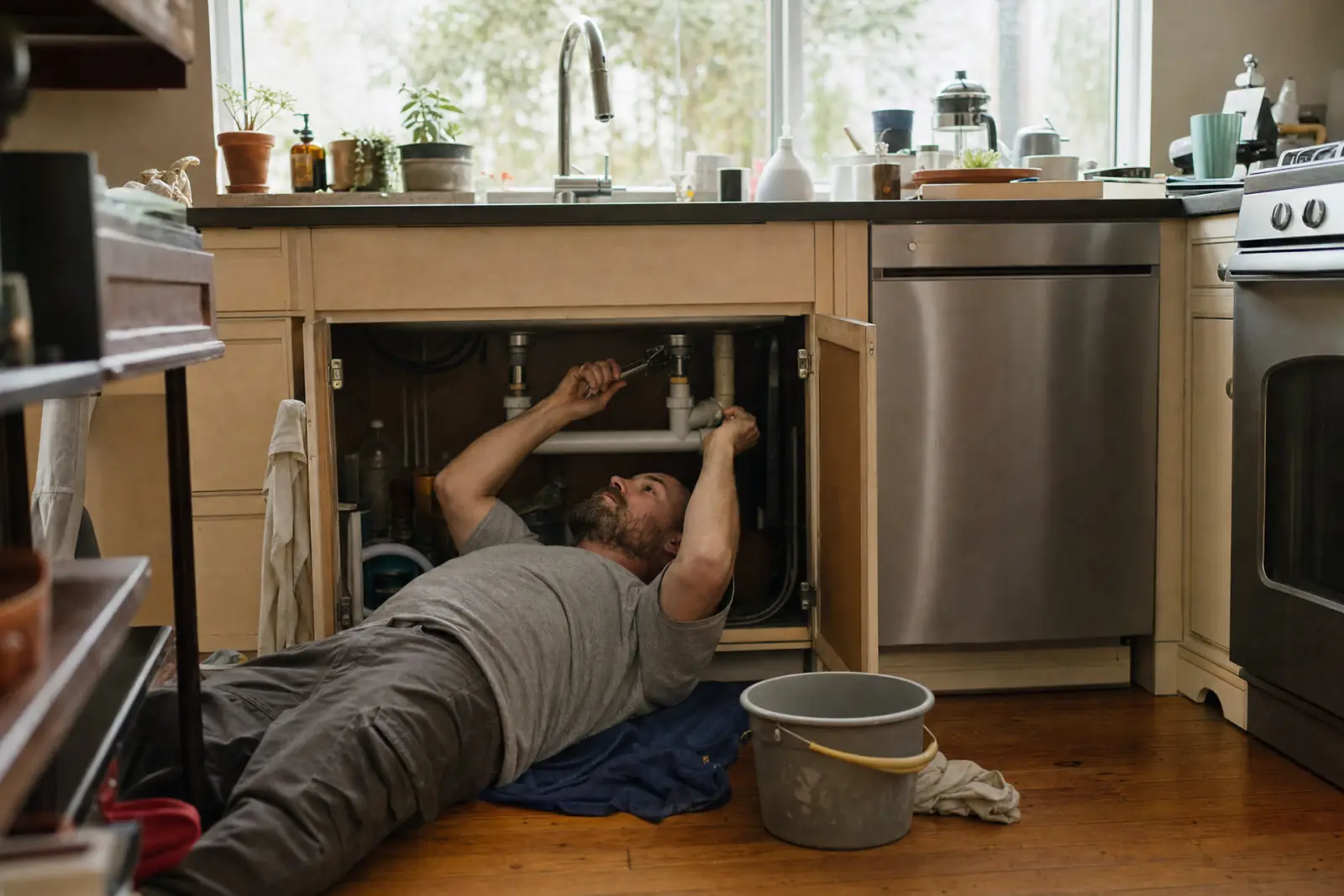
Plumbing service covers leaks, clogs, water heaters, toilets, faucets, fixtures, and pipe repair. A plumber can stop an active leak, clear a stubborn drain, replace a water heater, or rework pipes during a remodel. Swupi is a referral service, not a plumbing company: call or send a request, and we connect you with independent local plumbing companies that serve your area. You agree on the scope and timing with the company directly, and you are never obligated to hire anyone.
When do you need a plumber right away?
Call a plumber right away when water is going where it should not and you cannot stop it. Other problems can usually wait for a scheduled visit.
Treat these as urgent:
- A burst or leaking pipe you cannot isolate
- Sewage backing up into tubs, showers, or floor drains
- No water to the whole house
- A water heater leaking from the tank
- A smell of gas near a gas water heater. Leave the house and call your gas utility first.
Before help arrives, find your main water shut-off valve. It is often where the water line enters the house, near the water meter, or in a basement, crawlspace, or garage. Turning it off limits damage. For a single fixture, use the small shut-off valve under the sink or behind the toilet.
These can usually wait for a regular appointment: a slow drain, a running toilet, a dripping faucet, low pressure at one fixture, or a water heater that runs out of hot water too fast.
What kinds of jobs do plumbers handle?
Plumbers handle far more than clogged drains. Knowing what a job usually involves helps you describe the problem clearly when you call.
| Job | What it usually involves |
|---|---|
| Leak repair | Finding the source, replacing a fitting, valve, or section of pipe, and testing for more leaks |
| Drain clearing | Snaking or jetting the line, sometimes with a camera inspection to find the blockage |
| Toilet repair | Replacing a flapper, fill valve, wax ring, or the whole toilet |
| Water heater replacement | Draining and removing the old unit, setting the new one, and connecting water, gas or electric, and venting. Often needs a permit. |
| Faucet and fixture installs | Removing the old fixture, fitting the new one, and checking supply lines and shut-off valves |
| Sewer line work | Camera inspection, clearing roots or debris, or repairing a damaged section. Often needs a permit. |
| Repiping | Replacing old or failing supply lines, often in stages, with walls opened where needed |
When you call, say which fixture is affected, whether more than one drain is slow, and whether you have shut off the water. That helps the company send the right person with the right parts.
How do you choose a plumber?
Most states license plumbers, often at apprentice, journeyman, and master levels. Check a plumber's license yourself on your state's licensing board website. Search for your state's name plus "plumbing license lookup" and enter the name or license number.
Questions to ask before work starts:
- What do you think is causing the problem, and how will you confirm it?
- What parts will you use, and is there a warranty on parts and labor?
- Will this job need a permit, and who pulls it?
- How long will the water be off?
- Can I get the estimate in writing before you start?
For bigger jobs, like a water heater replacement or repiping, the Federal Trade Commission recommends getting more than one written estimate and asking for proof of insurance. Its home improvement guide also warns about pressure to decide on the spot and about companies that ask you to get the permit yourself.
When you call through Swupi, you reach an independent local plumbing company, not a Swupi employee. You agree on the scope and timing with that company. See how Swupi works.
What happens when a plumber comes out?
A typical visit has four parts.
- Diagnosis: the plumber finds the cause. For drains, that may mean a camera inspection. For leaks, it may mean opening a small section of wall or ceiling.
- Estimate: you get a written description of the fix and the parts it needs before work starts. Ask how long the job should take.
- Repair: the plumber fixes the problem and tests it. For a water heater or major pipe work, a permit and a city inspection may follow.
- Wrap-up: ask for written notes on the work done, the parts used, and any warranty terms.
A few tips help the visit go faster:
- Clear the area under the sink or around the water heater before the plumber arrives.
- Know where your main shut-off valve is.
- Write down when the problem started and anything you tried already.
- Take photos of leaks or water stains for your records.
Drywall or flooring opened to reach a pipe is usually repaired separately by another trade. Ask the plumber what will be left open when they finish.
How can you prevent common plumbing problems?
Small leaks add up. The U.S. Environmental Protection Agency's WaterSense team says the average household's leaks can waste more than 9,300 gallons of water a year, and 9% of homes have leaks that waste 50 gallons or more per day. The EPA names worn toilet flappers, dripping faucets, and other leaking valves as the usual causes.
Simple habits that help:
- Check the toilet: put a few drops of food coloring in the tank. If color shows in the bowl within 15 minutes without flushing, the flapper is leaking.
- Watch the meter: read your water meter, use no water for two hours, and read it again. A change points to a hidden leak.
- Protect drains: keep grease, wipes, and food scraps out of drains. Use strainers in tubs and showers.
- Winterize: disconnect garden hoses before freezing weather and insulate pipes in unheated spaces.
- Maintain the water heater: follow the maker's instructions for flushing sediment, and know where its shut-off is.
If you spot water stains, a musty smell, or a water meter that moves when nothing is running, have a plumber check it early. Water damage can also affect floors and bathrooms.
Plumbing questions, answered
What should I do while waiting for a plumber?
Turn off the water at the fixture's shut-off valve or the main shut-off for the house. Move valuables away from the water, mop up what you can, and take photos. If you smell gas near a water heater, leave the house and call your gas utility first.
Where is my main water shut-off valve?
It is usually where the water line enters the house: near the water meter, or in a basement, crawlspace, garage, or utility closet. In warm climates it may be outside near the foundation. Find it and test it before you need it, so you can turn off the water fast in a leak.
What are signs a water heater needs repair or replacement?
Watch for water leaking from the tank, rusty or discolored hot water, rumbling or popping noises, hot water that runs out faster than it used to, or a pilot light that will not stay lit. A leak from the tank itself usually means replacement. Other problems may be fixable, so ask for both options.
How do I check if a plumber is licensed?
Most states license plumbers through a state board. Search your state's name plus "plumbing license lookup," then enter the plumber's name or license number. Confirm the license is active and matches the business name on your estimate. Ask for proof of insurance as well, as the FTC recommends.
Do I need a permit for plumbing work?
Often, yes. Many cities and counties require a permit for water heater replacement, repiping, and sewer line work, but simple repairs like a faucet or flapper usually do not. Rules vary by location, so ask the company who pulls the permit. The FTC lists a contractor asking you to get it yourself as a warning sign.
Is Swupi a plumbing company?
No. Swupi does not do plumbing work. Swupi is a referral service that connects you with independent local plumbing companies that serve your area. You agree on the scope and timing with the company you speak with, and you decide whether to hire them.
Ready to talk to a local plumbing company?
Homeowners pay nothing to use Swupi. We connect you with independent local pros; we are not a contractor. Calls may be recorded and connected to a service provider.