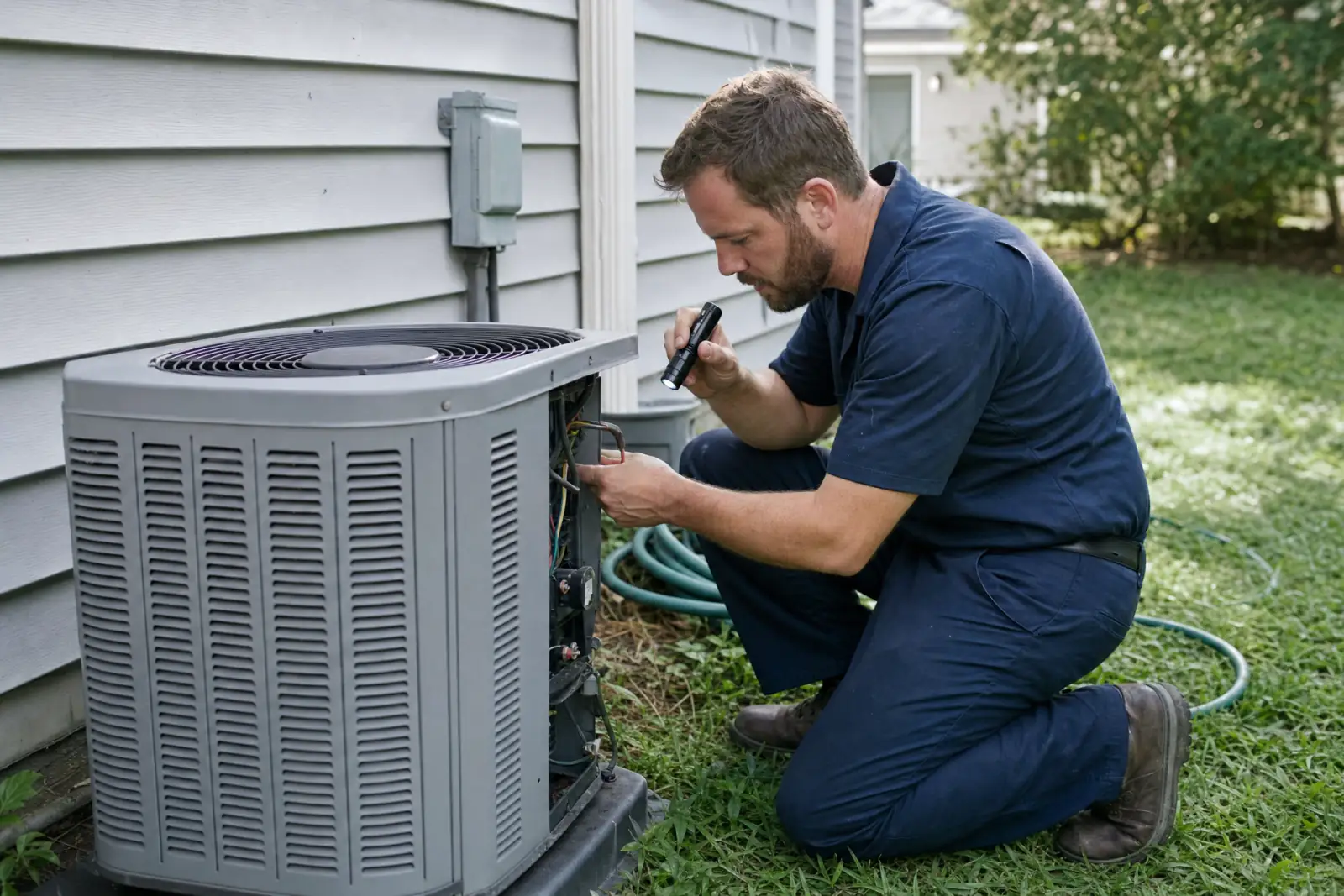
HVAC service covers repair, replacement, and upkeep of your furnace, air conditioner, heat pump, ducts, and thermostat. A local HVAC company can find out why a system will not heat or cool, replace worn-out equipment, and handle seasonal tune-ups. Swupi is a referral service, not a contractor: call or send a request, and we connect you with independent local heating and cooling companies that serve your area. You agree on the scope and timing with the company directly, and you are never obligated to hire anyone.
Should you repair or replace your HVAC system?
Repair usually makes sense when the system is fairly young and the fix is small. Replacement starts to make sense when the equipment is near the end of its normal life and repairs keep coming back.
This Old House puts typical lifespans at 10 to 15 years for air conditioners and heat pumps, and 15 to 20 years or more for furnaces with good care. Past those ages, a big repair buys less time.
Signs it may be time to replace:
- The system is past the typical lifespan above and needs a major part, such as a compressor or heat exchanger.
- You have called for repairs more than once in the same season.
- Some rooms stay too hot or too cold even with the thermostat set right.
- The system runs longer than it used to before it reaches the set temperature.
- The unit is loud, short-cycles, or blows weak air after a tune-up.
- Replacement parts for your model are hard to find, or the air conditioner uses R-22, an older refrigerant that is no longer produced in the United States.
Safety matters too. A cracked heat exchanger in a gas furnace, for example, is a reason to stop and talk about replacement rather than patch and wait. Ask the company to put both a repair option and a replacement option in writing so you can compare them side by side.
What are the signs your heating or cooling system needs service?
Heating and cooling problems often start small. Calling early can turn a no-heat or no-cool emergency into a routine visit.
Common signs your system needs a look:
- Weak or no airflow from the vents, even with a clean filter
- Warm air in cooling mode or cool air in heating mode
- New noises such as grinding, squealing, rattling, or banging
- Short cycling, where the system turns on and off every few minutes
- Water pooling around the indoor unit or a drain pan that keeps filling
- Ice on the refrigerant lines or the outdoor coil
- A thermostat that does not respond after you replace its batteries
- A burning smell that lasts beyond the first few minutes of the season's first run
Treat these as emergencies: if you smell gas (often described as rotten eggs), leave the house and call your gas utility or 911 from outside. Do not flip switches or use phones inside. If a carbon monoxide alarm sounds, get everyone into fresh air and call 911.
For anything else, write down what you notice and when it happens. That helps the company find the cause faster.
How do you choose an HVAC company?
Start by checking the company's license yourself. Most states license HVAC or mechanical contractors, and your state's contractor licensing board has a public lookup. Search for your state's name plus "contractor license lookup" and enter the company name or license number.
The Federal Trade Commission's home improvement guide adds more steps that fit HVAC work well:
- Get more than one written estimate, and ask what each one includes.
- Ask for proof of insurance.
- Make sure the contract lists the company's name, address, phone, and license number, plus start and finish dates and everything promised.
- Be wary of pressure to decide on the spot.
- Be cautious if a company asks you to get the permit yourself.
For HVAC in particular, ask how they will size the new system. A proper load calculation looks at your home's square footage, insulation, windows, and layout, not just the size of the old unit. Ask about the equipment warranty and whether the company registers it for you, and ask who pulls the permit.
When you call through Swupi, you speak with an independent local company. You agree on the scope and timing with them directly. Here is how Swupi works.
What happens during an HVAC replacement?
Most replacements follow the same basic steps, though the details vary by home and company.
- In-home visit: a technician looks at the current equipment, ducts, electrical, and thermostat, and measures the home to size the new system.
- Written quote: you get the equipment model, efficiency rating, scope of work, timeline, and warranty terms in writing. Compare at least two.
- Permit: many cities require a mechanical permit. The contractor usually pulls it; confirm this in writing.
- Removal and install: the old unit is disconnected and hauled away, then the new equipment is set, connected, and charged with refrigerant. Duct changes, if any, happen now.
- Start-up and test: the installer runs the system in heating and cooling modes and checks airflow and thermostat settings.
- Inspection and paperwork: a local inspector may visit. Keep the work order, model and serial numbers, and warranty papers together.
A straightforward swap is often done in a day or two. Jobs with new ductwork or a switch to a heat pump can take longer. Ask the company for a timeline in your quote, and ask how they protect floors and clean up.
How can you keep your heating and cooling system running well?
Most of the upkeep that extends system life is simple. ENERGY STAR recommends you inspect, clean, or change the air filter once a month in a central air conditioner, furnace, or heat pump. A clogged filter makes the system work harder.
ENERGY STAR also suggests having the cooling system checked in the spring and the heating system checked in the fall. A typical professional tune-up includes:
- Checking the thermostat settings
- Tightening electrical connections
- Lubricating moving parts
- Inspecting the condensate drain
- Checking system controls for safe start and shut-off
- Cleaning the coils on the cooling side and checking gas connections on the heating side
Things you can do yourself:
- Keep plants, leaves, and debris at least a couple of feet clear of the outdoor unit.
- Keep supply and return vents open and unblocked by furniture.
- Test your carbon monoxide alarms if you have gas heat.
- Write down odd noises, smells, or short cycling and mention them at your next service visit.
Regular checks catch small problems, like a clogged drain line or a worn part, before they turn into a no-heat or no-cool call on the hottest or coldest day of the year.
HVAC questions, answered
How long does an HVAC system last?
This Old House lists 10 to 15 years for air conditioners and heat pumps, and 15 to 20 years or more for furnaces with good care. Climate, how hard the system runs, and regular maintenance all affect lifespan. Near the end of that window, compare repair and replacement quotes.
How long does an HVAC replacement take?
A straightforward swap of similar equipment is often done in a day or two. New ductwork, a switch to a heat pump, or waiting on a permit or inspection can add time. Ask the company to include a timeline in your written quote.
What should I do if I smell gas or my carbon monoxide alarm goes off?
If you smell gas, leave the house right away and call your gas utility or 911 from outside. Do not flip switches or use phones inside. If a carbon monoxide alarm sounds, get everyone into fresh air and call 911. Have the heating system checked before you use it again.
How often should I change my HVAC filter?
ENERGY STAR recommends inspecting, cleaning, or changing the air filter once a month for central air conditioners, furnaces, and heat pumps. Check more often during heavy use, or if you have pets or construction dust. A dirty filter restricts airflow and makes the system work harder.
Do I need a permit to replace my furnace or AC?
Many cities and counties require a mechanical permit for HVAC replacement, but rules vary by location. The contractor usually pulls the permit. Confirm in your written contract who is responsible, and be cautious if a company asks you to get the permit yourself, which the FTC lists as a warning sign.
How does Swupi help with HVAC service?
Swupi is a referral service, not an HVAC company. When you call or submit a request, we connect you with an independent local heating and cooling company that serves your area. You discuss the job and timing with that company directly, and you are never obligated to hire anyone.
Ready to talk to a local HVAC company?
Homeowners pay nothing to use Swupi. We connect you with independent local pros; we are not a contractor. Calls may be recorded and connected to a service provider.