Siding work covers repairing damaged boards and panels or replacing the siding on your whole house with vinyl, fiber cement, wood, engineered wood, or metal. Siding is your home's outer shell: it keeps rain and wind out of the walls and sets the look of the house. Describe your project, and Swupi connects you with independent local siding companies that serve your area so you can compare quotes. You agree on the scope and timing directly with the company you pick, and you are never obligated to hire anyone.
Should you repair or replace your siding?
Repair makes sense when damage is limited to a few spots, such as a cracked panel, a dented section, or a board hit by a branch. Replacement starts to make sense when problems are spread across the house or the siding is near the end of its life.
This Old House advises replacing rather than patching when damage covers more than half of the siding area, and says warping or rot usually calls for replacing whole sections instead of sealing them. Matching the color of older, faded siding can also be hard, which is one reason some homeowners replace a full wall instead of a few boards.
Signs you may need new siding:
- Warped, buckled, or loose panels
- Soft, rotted, or crumbling boards, especially near the ground and under windows
- Cracks, holes, or gaps where water can get behind the siding
- Peeling paint or water stains on inside walls that face the outside
- Fading or chalky surfaces over large areas
- Mildew or moss that keeps coming back after cleaning
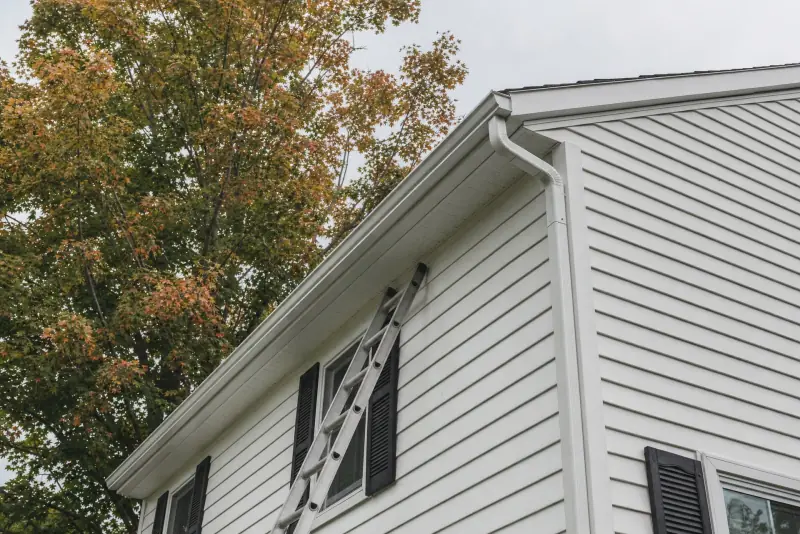
Siding, gutters, and the roof work together to keep water out. Overflowing gutters can soak the siding below, so check your gutters when you see stains or rot near the top of a wall. If your roof is also aging, ask whether it makes sense to plan both projects; see the roofing guide.
What does a siding project include besides the new siding?
A whole-house siding job is more than the panels or boards you see. When you compare quotes, check that each one covers the same work.
- Wall area: the job is measured by the outside wall area, not the floor area of the home. Windows, doors, and gables all change the layout.
- Removing old siding: ask whether the old siding comes off or the new siding goes over it, and who hauls it away.
- Sheathing and hidden damage: once the old siding is off, rotted sheathing or framing may turn up. Ask how the company will show you any damage and get your approval before fixing it.
- House wrap: a moisture barrier behind the siding helps keep water out of the walls.
- Flashing: metal or membrane flashing around windows, doors, and roof lines directs water outward.
- Trim, soffit, and fascia: corners, window wraps, and the boards under the roof edge are often listed as separate items.
- Height and access: second stories, steep lots, and tight spaces may need scaffolding.
- Permits: many cities and counties require one for re-siding; ask who pulls it.
A clear written scope makes quotes easier to compare and avoids surprises once the work starts.
Which siding material fits your home?
Each material trades looks, upkeep, and lifespan differently. Ask each company how the options hold up in your local climate.
| Material | Typical lifespan | Upkeep and notes |
|---|---|---|
| Vinyl | 20 to 40 years | Many colors, no painting needed. Hard impacts can crack it. |
| Aluminum | 20 to 40 years | Does not rust, but can dent more easily than steel. |
| Fiber cement | 50+ years | Heavy boards made from cement and wood fibers. Can be painted to change color later. |
| Engineered wood | 20 to 30 years with proper upkeep | Wood strands or fibers bonded with resin, sold as lap boards and panels. |
| Wood (cedar) | 20 to 40 years | Classic look, but needs regular painting or staining. |
| Stucco | 50 to 80 years | Hard, seamless finish; cracks should be sealed to keep water out. |
| Stone or brick veneer | 100+ years | Very durable; often used as an accent on lower walls or entries. |
- Vinyl: comes in many colors and styles, including looks that mimic wood grain. It needs little more than an occasional wash.
- Fiber cement: This Old House says it can last 50 years with proper installation. It resists rot and insects and holds paint well.
- Wood: cedar and other wood siding give a natural look but need regular painting or staining to keep out moisture.
- Engineered wood: offers a wood look in a manufactured board; follow the maker's care and painting instructions.
- Metal: steel and aluminum siding. Steel is sturdier against dents, while aluminum is lighter.
How do you choose a siding company?
Contractor licensing rules for siding vary by state and city. Check your state contractor board and your city or county, and confirm any license number the company gives you.
Older homes need extra care. If your home was built before 1978, painted siding and trim may contain lead. The EPA's Lead Renovation, Repair and Painting Rule requires firms doing covered renovation work on these homes to hold EPA certification, so ask to see the company's EPA firm certification.
The Federal Trade Commission's home improvement guide recommends getting several written estimates, asking for proof of insurance, and getting a contract with the company's name, address, phone, and license number. It also warns about door-to-door offers and pressure to decide on the spot.
Siding-specific questions to ask:
- Is removing the old siding part of the job, and how will you handle rot you find under it?
- Will you install house wrap or another moisture barrier?
- Will you follow the siding maker's installation instructions?
- Are trim, soffit, fascia, and window wraps included in the quote?
- Who pulls the permit?
- Who covers the product warranty, and who covers the workmanship?
Swupi connects you with independent local siding companies. See how Swupi works.
What happens during a siding replacement?
Most whole-house siding jobs follow these steps.
- Measure and quote: the company measures the walls, notes windows, doors, and trim, and gives you a written quote.
- Prep: outdoor items are moved, plants are protected, and ladders or scaffolding go up.
- Tear-off: the old siding comes off, and the sheathing underneath is checked. Rotted boards are replaced.
- Moisture barrier: house wrap or another barrier goes on, with flashing around windows and doors.
- New siding and trim: panels or boards are installed along with corners, trim, soffit, and fascia.
- Clean-up and walk-through: debris and nails are cleared, and you walk the house with the company.
This Old House says siding installation typically takes 7 to 14 days. Weather, home size, and repairs to the walls can change that, so ask for a schedule in your contract.
After the job, keep new siding in shape with a gentle wash once a year, a look for loose or cracked pieces after storms, and fresh caulk where trim meets the siding. Keep plants and sprinkler spray off the walls, and keep your gutters flowing so water does not pour down the siding.
Siding questions, answered
Which siding material lasts longest?
This Old House lists stone and brick veneer at 100+ years, stucco at 50 to 80 years, and fiber cement at 50+ years. Vinyl, aluminum, and cedar are listed at 20 to 40 years. Real life depends on installation, climate, and upkeep, so compare care needs as well as lifespan.
Can I replace just part of my siding?
Often, yes. Damaged boards or panels can be replaced one section at a time. Matching the color of older, faded siding can be hard, so ask the company about matching before work starts. This Old House advises replacement when damage covers more than half the siding.
What are the signs my siding needs replacing?
Look for warped, buckled, or loose panels, soft or rotted boards, cracks or gaps where water can get in, and fading or chalky surfaces across large areas. Peeling paint or water stains on inside walls that face outward can also point to water getting behind the siding.
How long does siding installation take?
This Old House says siding installation typically takes 7 to 14 days. Larger homes, second stories, bad weather, and rotted sheathing found under the old siding can add time. Ask the company for a written schedule, and ask how they will protect your plants, windows, and yard during the work.
Does siding work on an older home need special care?
If your home was built before 1978, painted siding and trim may contain lead. Under the EPA's Lead Renovation, Repair and Painting Rule, firms doing covered work on these homes must be EPA-certified, so ask to see the company's EPA firm certification before work starts.
How should I care for new siding?
Wash it gently about once a year, look for loose or cracked pieces after storms, and recaulk where trim meets the siding. Keep plants and sprinkler spray off the walls, and keep gutters clear so water does not run down the siding. Wood siding also needs regular painting or staining.
How does Swupi help with siding?
Swupi is a referral service, not a siding contractor. When you call or send a request, we connect you with an independent local siding company that serves your area. You discuss the job and timing with that company directly, and you are never obligated to hire anyone.